Kazakh Scholar to Teach at Oxford
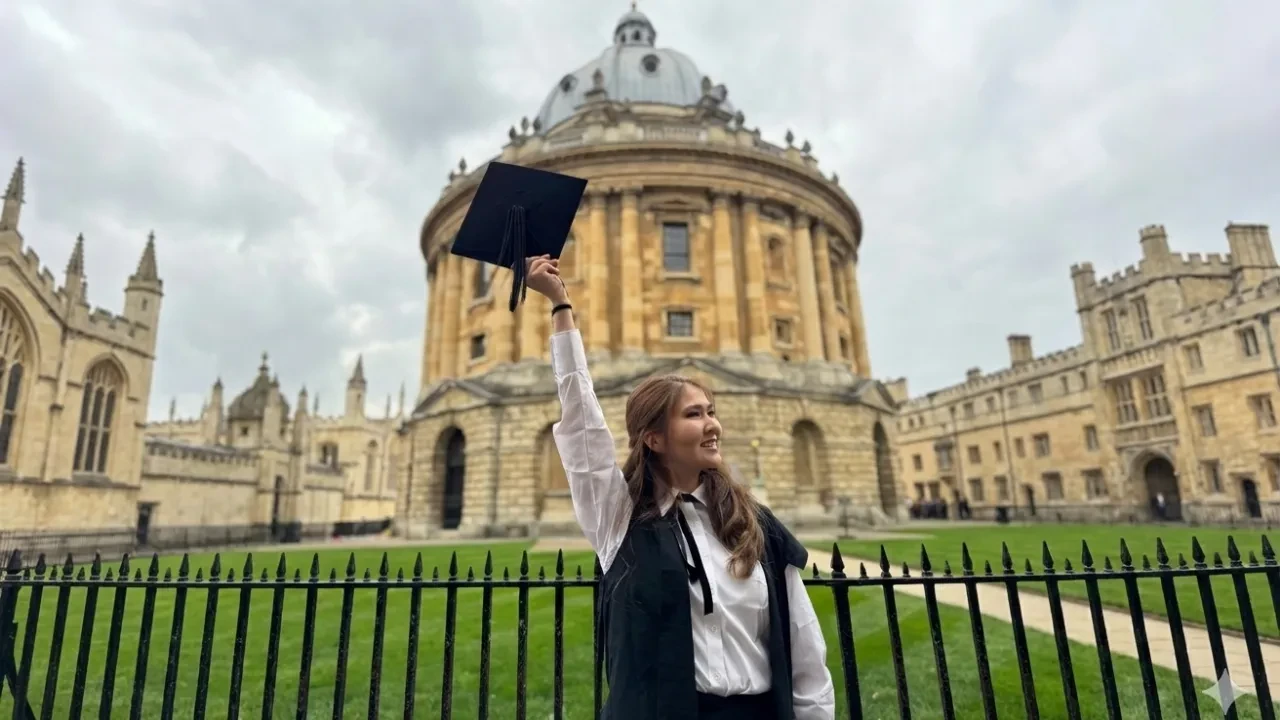 Photo Author: Photos provided by Meruert Bizhanova
Meruyert Bizhanova, a doctoral student at the University of Oxford, has received a prestigious appointment as a Teaching Fellow. She will now join the faculty of one of the world's oldest universities while continuing her scientific research. We spoke with her about her journey to Oxford, competition, common applicant mistakes, and why dreaming big is essential.

– What does being appointed as a Teaching Fellow at Oxford mean to you?
–For me, this is primarily a sign of trust and recognition of my path as a researcher and educator. This role means the university sees me not just as a PhD student working on a thesis, but as someone capable of building a meaningful academic dialogue with students. Personally, it allows me to merge my research interests with pedagogical practice. Working with undergraduates in discussion seminars allows me to constantly rethink my own research questions and learn to explain complex ideas in accessible language.
– What is your PhD focus, and what exactly will you be teaching?
–My doctorate is dedicated to Education, specifically the development and reform of higher education in Kazakhstan from a comparative and international perspective. As a Teaching Fellow, I will participate in teaching the Vice-Chancellor’s Colloquium, focusing on the role of Artificial Intelligence (AI) in research and its impact on the research ecosystem.

– What was the most difficult stage on your way to Oxford?
The high level of competition and the pressure were the hardest parts. It requires not just knowledge, but immense internal resilience. I remember sleeping only 4–5 hours a day to handle the workload. For me, there is no universal formula for success—only discipline, hard work, and the ability to keep moving forward despite obstacles.
– What typical mistakes do candidates make when applying to Oxford for a PhD?
1. Vague Research Proposals: They are often either too general or fail to show a clear link to current scientific discussions.
2. Weak Personal Statements: Applicants often fail to explain why they specifically need Oxford and their chosen department.
3. Superficial Recommendations: Getting letters from people who are not truly familiar with the candidate's academic work.
4. Lack of Clarity regarding Skills: Not highlighting specific research methods, languages, or publications.

– Should one get a Bachelor’s and Master’s in Kazakhstan first, or go abroad right after school?
– It depends on personal goals. Education in Kazakhstan provides a solid foundation and understanding of the local context. Going abroad immediately after school allows for earlier immersion in an international environment. My experience shows that a high-quality Kazakhstani education combined with subsequent study abroad creates a harmonious balance between national context and international standards.

– What resources, grants, or scholarships would you recommend to Kazakhstanis?
– For Kazakhstani students wishing to study abroad, there are several important sources of funding. First, there are the scholarships from the Government of Kazakhstan, including the well-known "Bolashak" program, which provides grants for studying at top international universities.
Additionally, many leading global universities—such as Oxford, Cambridge, Harvard, and Stanford—offer their own scholarships for international students, covering tuition and, in some cases, living expenses. There are also international research grants and scholarships like Fulbright (USA), Chevening (UK), DAAD (Germany), and Erasmus+ (EU), which support Master's and Doctoral programs.
Furthermore, foundations and programs from organizations such as UNESCO and the World Bank often provide scholarships for students from transition economies. To find current opportunities, I recommend using online platforms like ScholarshipPortal, ProFellow, and StudyPortals, which aggregate information about various grants and scholarships worldwide.
– What one piece of advice would you give to young people in Kazakhstan who dream of Oxford but think it's "not for them"?
– Believe in your dream and never let anyone convince you it is "too big." Surround yourself with people who inspire and support you. Strategic planning is key—don't leave your ideas as just dreams; calculate your steps and act purposefully. Success comes to those who combine ambition with discipline.

– What would you like to change in the student preparation system in Kazakhstan?
– I would like to see more flexibility in choosing a major during the first year. In the US, for example, students can explore different disciplines (liberal arts) before committing. Introducing such an approach in Kazakhstan would help students make more conscious career choices and develop multidisciplinary thinking.
– What is your personal motivation—why are you doing this, and what comes next?
– My personal motivation is to believe in my dream and never allow anyone to convince me that it is too big or unattainable. If someone tells you your goal is impossible, simply do not surround yourself with such people. Instead, seek those who inspire, support, and see your potential—those who sincerely believe in your strength. It is vital to dream on a large scale and set high goals for yourself. Even if the path is difficult, it is precisely those ambitious dreams and high standards that drive you forward and help you achieve what initially seems incredible.
– Thank you for the interview! We wish you great success in your teaching career and your studies.
Photos courtesy of Meruyert Bizhanova

Last news
-
Kazakhstan to Launch QR-Code System for Free Prescription Medications
21 hours ago
-
Erlan Koshanov Chairs Inaugural Presidium Session of the People's Council of Kazakhstan
1 day ago
-
President Tokayev Receives World No. 1 Tennis Player Elena Rybakina
4 days ago
-
MRI Study: Nighttime Light Exposure and Screen Glow Increase Risk of Heart Disease
4 days ago
-
Disqualification Controversy at Asian Games: Kazakhstani Athlete Stripped of Gold Medal Over Footwear Violation
4 days ago
-
Earthquake Felt in Almaty as Tremors Reach Up to 4 Magnitude
4 days ago
-
Why Did the Casualty Figure Change from 19 to 17? Defense Ministry Clarifies Status of Two Sailors
4 days ago
-
Official Bank Account Opened for Public Contributions to Families of Deceased Servicemen
1 week ago
-
Search Operation Concludes in the Caspian: Bodies of Final Two Servicemen Recovered
1 week ago
-
Suspects Identified in Mangystau Military Tragedy: Over 30 Witnesses Interrogated
1 week ago
-
Over 250 Personnel Mobilized in Search for Two Missing Servicemen in the Caspian Sea
1 week ago
-
Investigation Launched Under Two Criminal Articles Following Fatal Caspian Military Exercise
1 week ago
-
Kazakhstan Declares National Day of Mourning Following Caspian Sea Military Tragedy
1 week ago
-
Court Overturns White House Ban on Journalists
1 week ago
-
Xi Jinping Arrives in the US: Trump Personally Welcomes Him at the Airport
1 week ago
-
Rome’s Colosseum Temporarily Closed Following Fatal Workplace Accident
1 week ago
-
Has AI Gone Out of Control: Popular Agent Breaches Government Secret Files
1 week ago
-
Tennis Star Aryna Sabalenka Hits the Runway for Gucci at Milan Fashion Week
1 week ago
-
Over 200 Illegally Transported iPhone 18s Intercepted at Astana Airport
1 week ago
-
Where Is the Vaccine: Why Kazakhstanis Are Unable to Get Flu Shots
1 week ago
-
All Rental Bikes in Astana to Be Locked Starting October 1
1 week ago
-
South Korea Bans Entrance Exams for Preschools
1 week ago
-
Tokayev Convenes Inaugural Session of the People's Council of Kazakhstan
1 week ago
-
Tokayev Convenes Inaugural Session of the People's Council of Kazakhstan
1 week ago
-
Tokayev Convenes Inaugural Session of the People's Council of Kazakhstan
1 week ago
-
Major US News Outlets File Lawsuit Against Donald Trump
1 week ago
-
US May Allocate $5 Billion for Middle East Reconstruction Following Iran Conflict
1 week ago
-
WBC Champion Carlos Adames Challenges Janibek Alimkhanuly, Bringing Up Past Doping Controversy
1 week ago
-
Rising Costs Push Trump’s Approval Rating to a Record Low of 32 Percent
1 week ago
-
US Dollar Exchange Rate on September 22: Currency Prices in Kazakhstan
1 week ago
-
Is It a New Virus or Seasonal Illness? Over 51,000 Cases of ARVI Registered in Kazakhstan Since Early September
2 weeks ago
-
Crackdown on Fake Registrations: Almaty Introduces New Residential Space Limits for Residency Registration
2 weeks ago
-
"Go Die in Your Own Country": Thai Prime Minister Sparks Controversy with Harsh Warning to Foreigners
2 weeks ago
-
Apple Fans Surprised as Official Prices for the New iPhone 18 Pro in Kazakhstan Are Revealed
2 weeks ago
-
Hidden Dangers of Beauty Products: L’Oreal Facing Cancer Risk Allegations
2 weeks ago
-
Important Update for Kazakhstani Travelers: New Thailand Entry Rules Take Effect September 15
2 weeks ago
-
Elena Rybakina Officially Becomes World No. 1
2 weeks ago
-
President Tokayev Arrives in South Korea for an Official State Visit
2 weeks ago
-
25 Years Since September 11: The Attacks That Changed the World
3 weeks ago
-
Binance Set to Offer Banking-Style Services in Kazakhstan
3 weeks ago
-
Risk of AI Extinction Exceeds 10%, Experts Warn
3 weeks ago
-
Why Kazakhstan’s Unified QR Payment System Isn't Fully Operational Everywhere Yet
3 weeks ago
-
US Authorities to Tighten Visa Requirements for Foreign Workers
3 weeks ago
-
Nearly 200 Kazakh Students Stranded in Los Angeles After Travel Agency Failure
3 weeks ago
-
Elena Rybakina Reaches US Open Final
3 weeks ago
-
New Tick-Borne Virus Identified in China
3 weeks ago
-
Tokayev Congratulates Elena Rybakina on Reaching World No. 1 Ranking
3 weeks ago
-
Why Graduates of "In-Demand" Vocational Trades Face Unemployment in Kazakhstan
3 weeks ago
-
Kazakhstan and China Agree on Mutual Recognition of Driving Licenses
3 weeks ago
-
Education Minister Zhuldyz Suleimenova Addresses Parents Disrupting Teachers' Off-Hours
3 weeks ago